I would like to talk about a serious matter for once. Let’s talk about coffee. Not your fancy, overpriced latte with more bells and whistles than my christmas tree. I’m talking about a cup of coffee that whispers of a simpler time, a cup brewed with love and patience. A cup that doesn’t need frothed milk or flavored syrup to be enjoyable. Just a simple cup of black coffee.
I grew up in the days when coffee was just coffee. Yes, I was born in the 1900s, I’m that ancient. Coffee back then wasn’t complicated, there weren’t endless options to choose from, and it certainly didn’t cost an arm and a leg. A cup of coffee was just a comforting ritual, not a status symbol or a trendy accessory.
I wouldn’t necessarily call myself a coffee connoisseur, as I still struggle to tell the difference between a single-origin Ethiopian Yirgacheffe and a Sumatran Mandheling with my eyes closed, but I do have preference, I like Indonesian coffees, whether it’s a Mandheling, Toraja, or another variety. I run on this stuff, my blood type might as well be “caffeine positive”. My dependence on coffee? It’s legendary. Everyone in my house knows I don’t function before coffee. The wise thing to do around me in the morning is just let me get my first sip of coffee before I face the existential dread of a brand new day. Coffee is my shield against the harsh realities of the morning.
Anyhoo, continuing my Flores adventures, I noticed a pattern that piqued my curiosity; everyone was raving about Wae Rebo coffee. Restaurants, cafes, even the suspiciously chipper hotel staff – all seemed possessed by a single, caffeinated question: “Have you tasted Wae Rebo coffee?”. Now, this is interesting. I mean, Flores Island is a world-renowned coffee scene, and Labuan Bajo is its beating heart. So, why the specific focus on Wae Rebo coffee? Was it the secret nectar of the Flores elite, or something? Or was this whole Wae Rebo coffee business just another clever marketing ploy to lure in gullible tourists like myself?
The peak was when our driver told us that we MUST try Wae Rebo coffee when we arrive at the said village above the cloud, he said it’s the best coffee in Flores. Or is it really? The question hung heavy in the air, a cliffhanger worthy of a telenovela. The plot, as they say, thickened.
Dun dun dun…
Wae Rebo Coffee
As the saying almost goes, a good cup of coffee is a matter of personal preference, unless of course, it’s bad. Then everyone agrees. All of a sudden, my caffeine-fueled curiosity went into overdrive. I made it a personal mission to have a sip and to know more about this mysterious brew. After all, what better place to find the truth about a coffee than at its very birthplace?
The trek to Wae Rebo was, brutal shall we say, a character-building experience, ahem. I wrote about the tale of the aching calves and breathtaking vistas here. Now let’s get down to the moment we’d all been waiting for: the legendary COFFEE.
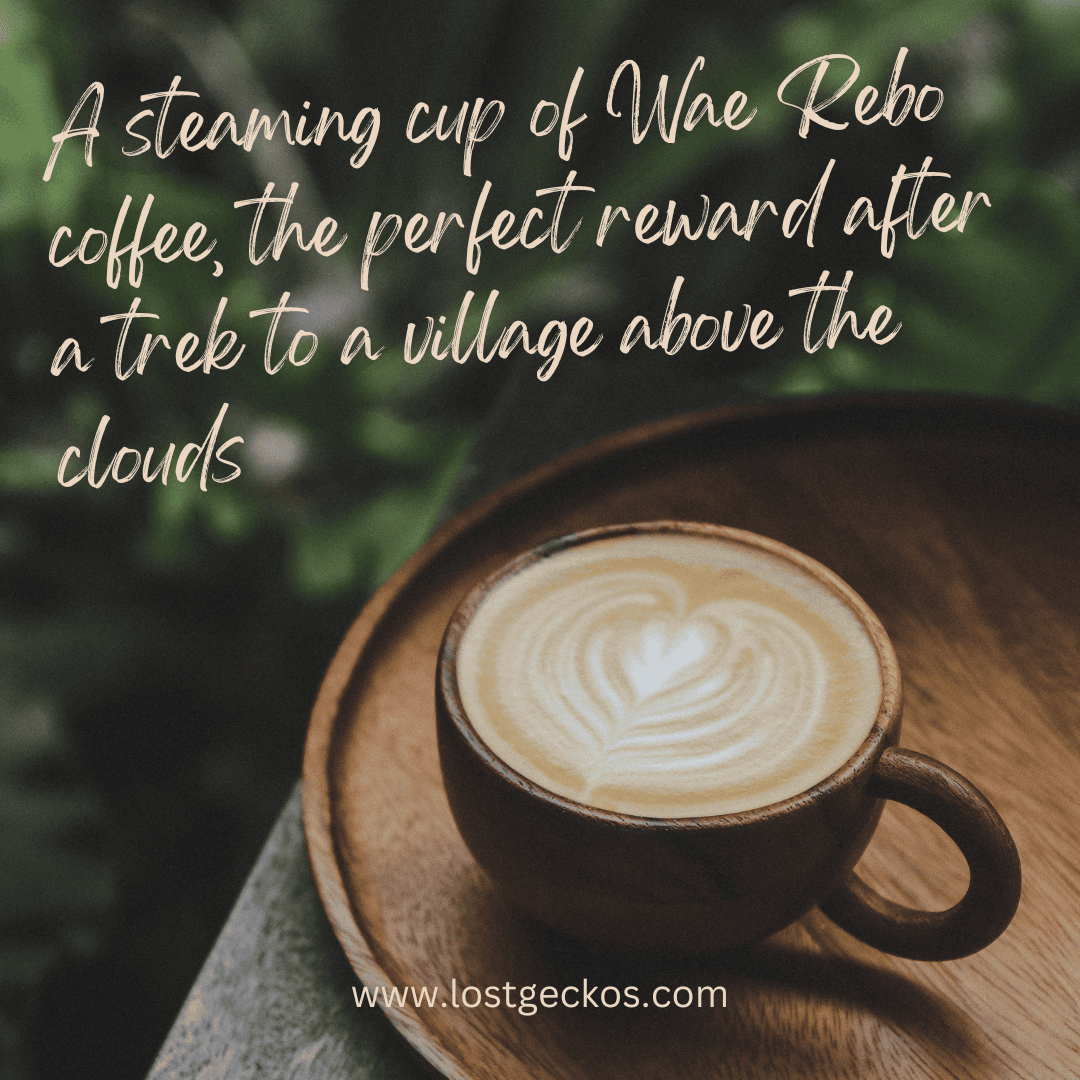
Freshly roasted and brewed, the Wae Rebo coffee arrived steaming hot in our hands. The aroma was intoxicating – a heady mix of earthiness and a hint of citrus. With a tentative first sip, the magic unfolded. The coffee was strong, thick a and smooth, with a complex flavor that lingered on the tongue. Although my legs were still protesting, the first sip felt like a reward.
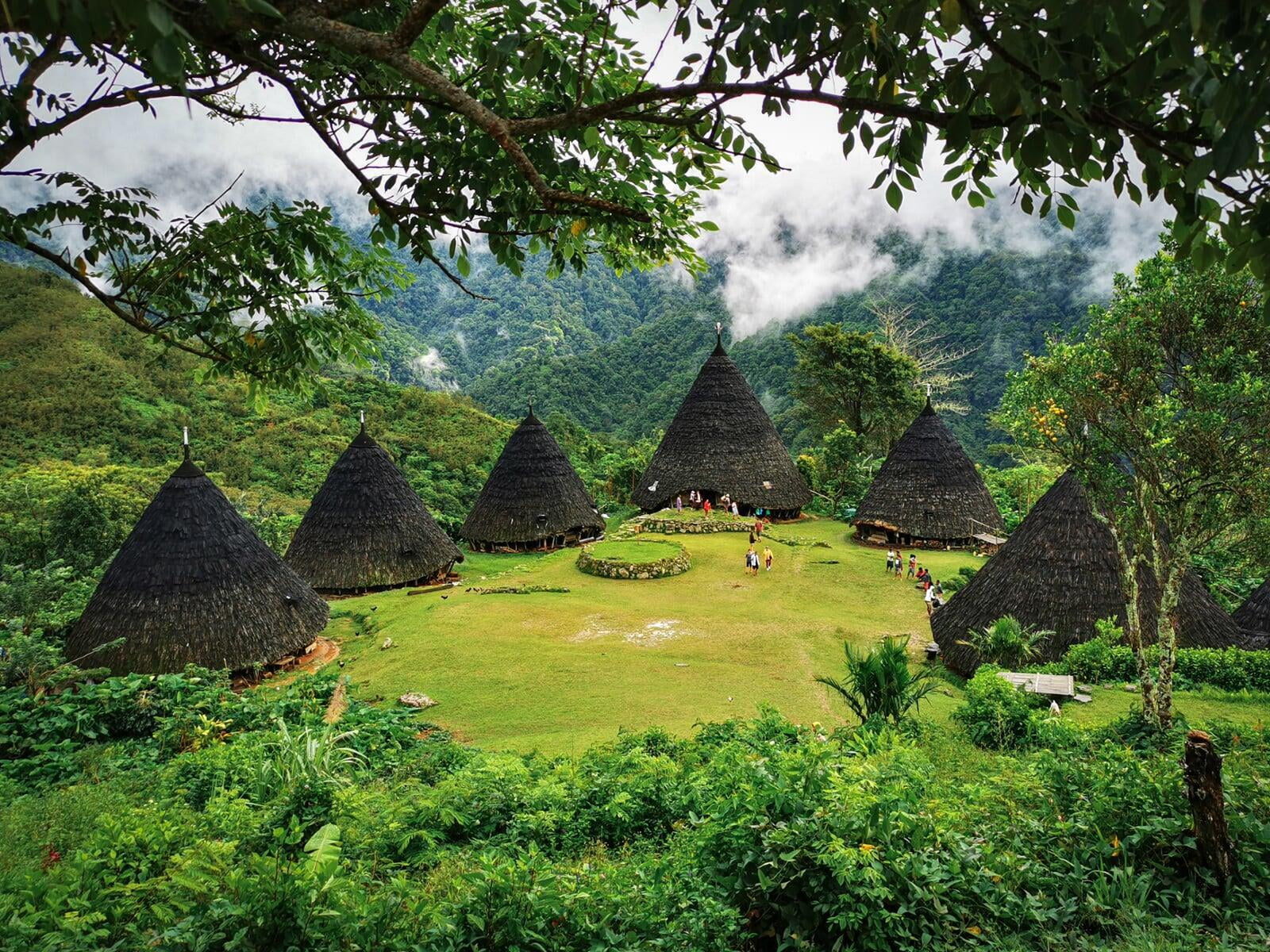
We spent the night in one of the village’s iconic cone-shaped huts, where the coffee was free-flowing. They literally left a few kettles of freshly brewed Wae rebo coffee for us to test our caffeine tolerance. Was this a friendly gesture, or were they secretly plotting to fuel us with enough caffeine to single-handedly rebuild their entire village? Tsk!, Good thing I had a modicum of self-control, I said to myself with jittery hand and fast-beating heart. Ahahaha… -nervous laugh
Unfortunately, we arrived just outside the harvest season, meaning the guided tours and coffee wisdom were on hold – basically, none of the intel I was craving for was available. Darn it!. I was actually hoping for a coffee plantation tour like I had in Colombia. This mean, I had to embark on my own, slightly less official, coffee investigation (read: venturing around like a creep, drawing up conclusions, and making assumptions). Perhaps not the most dignified approach, but hey, a passionate coffee lover gotta do what a passionate coffee lover gotta do!
And here’s my take:
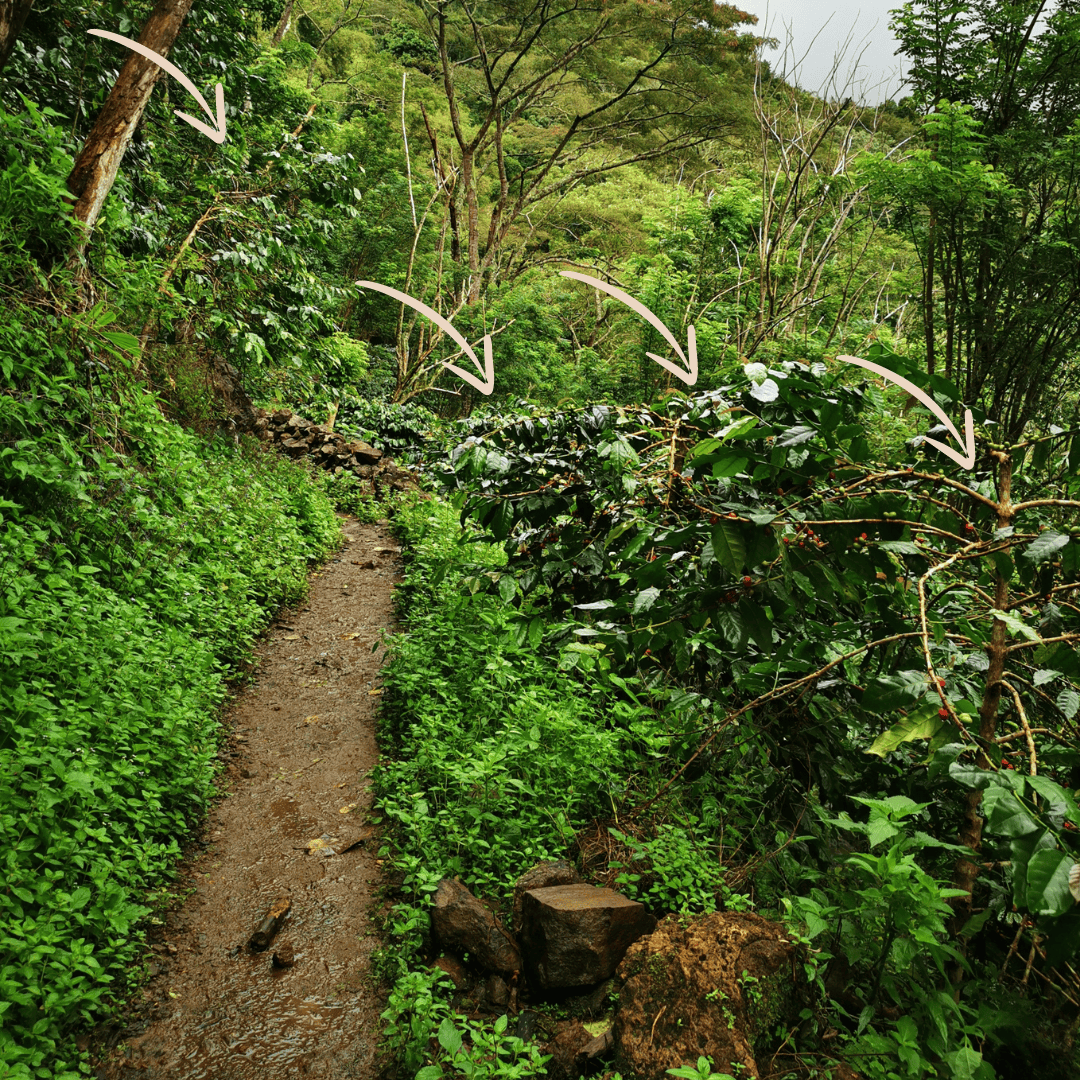
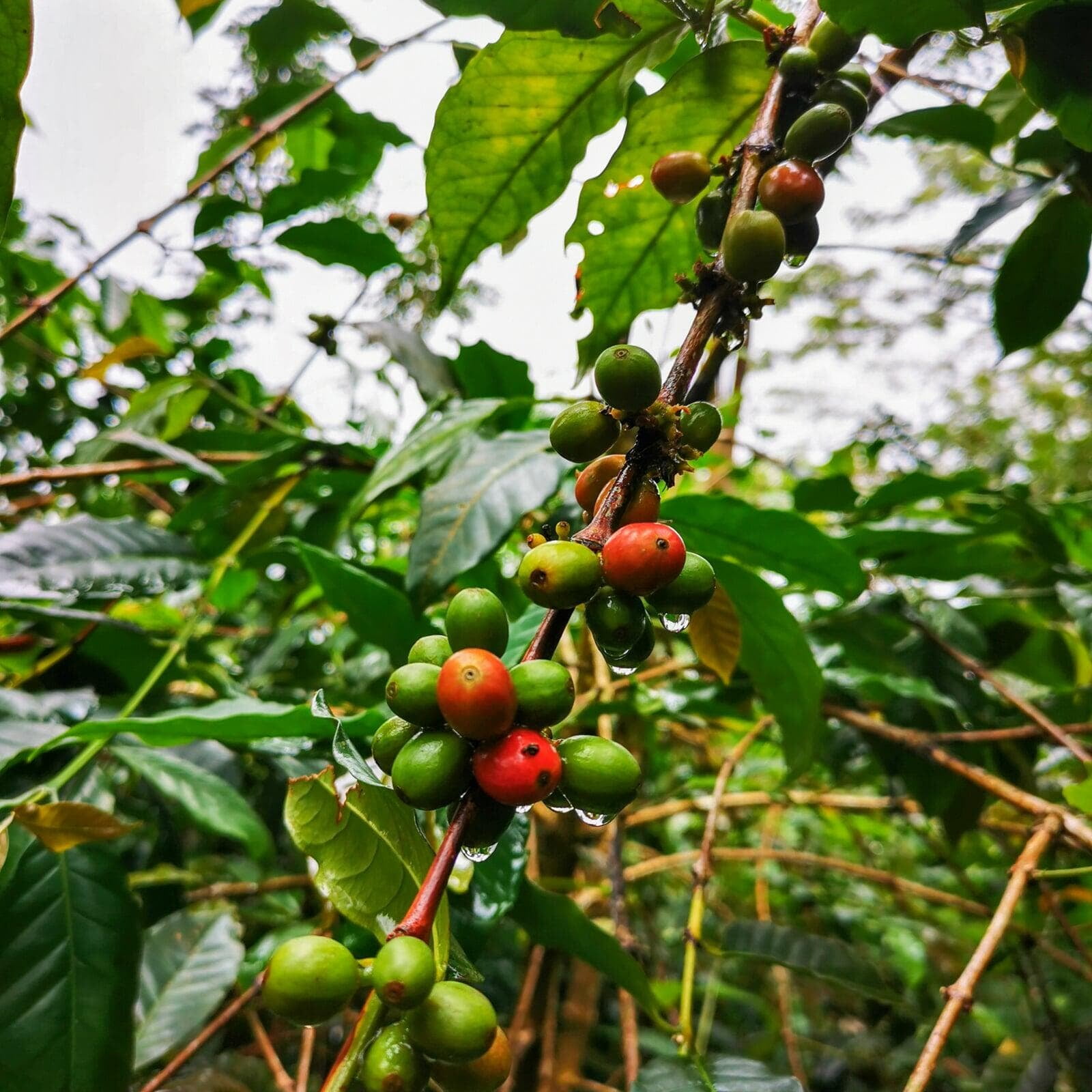
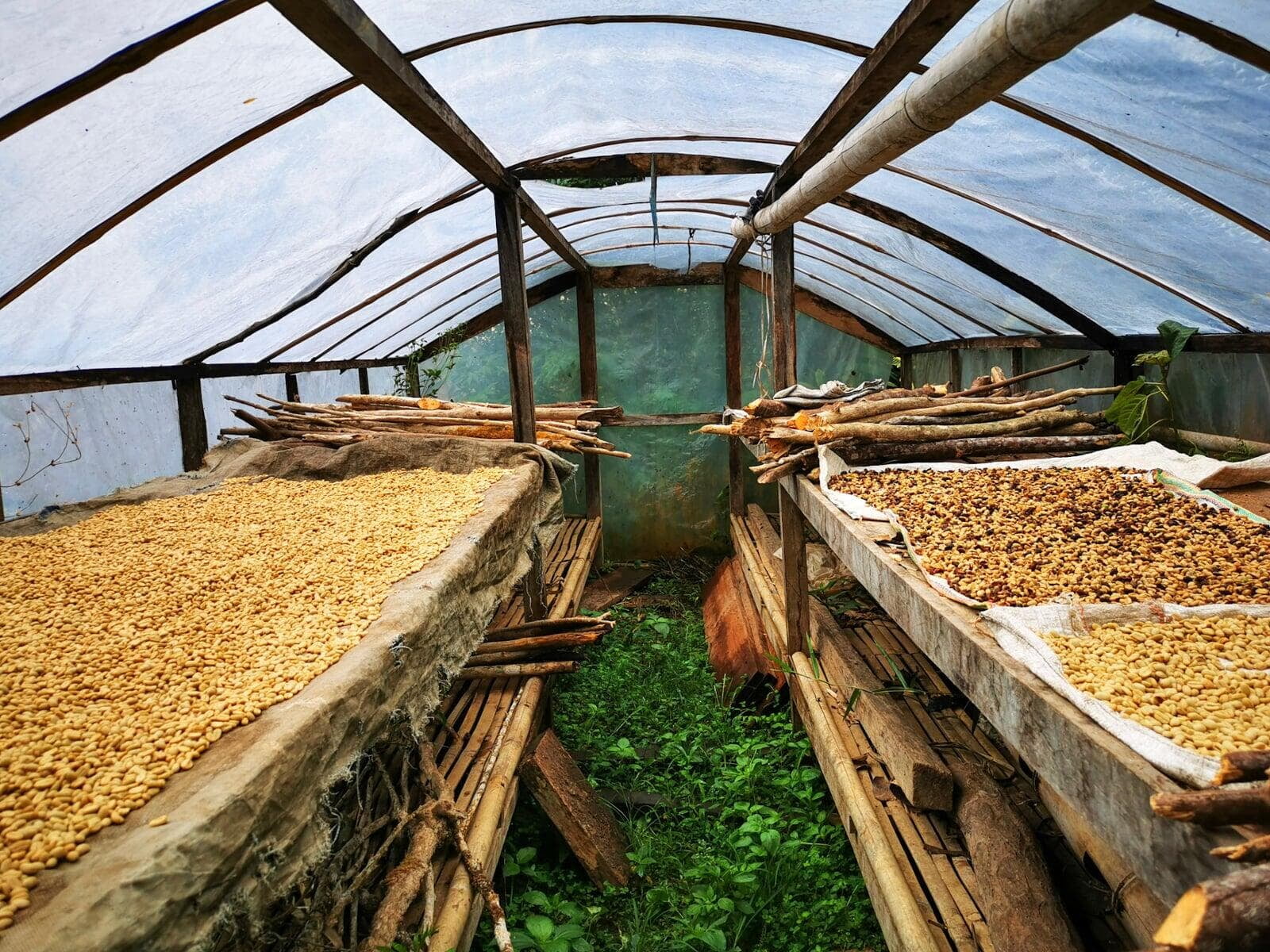
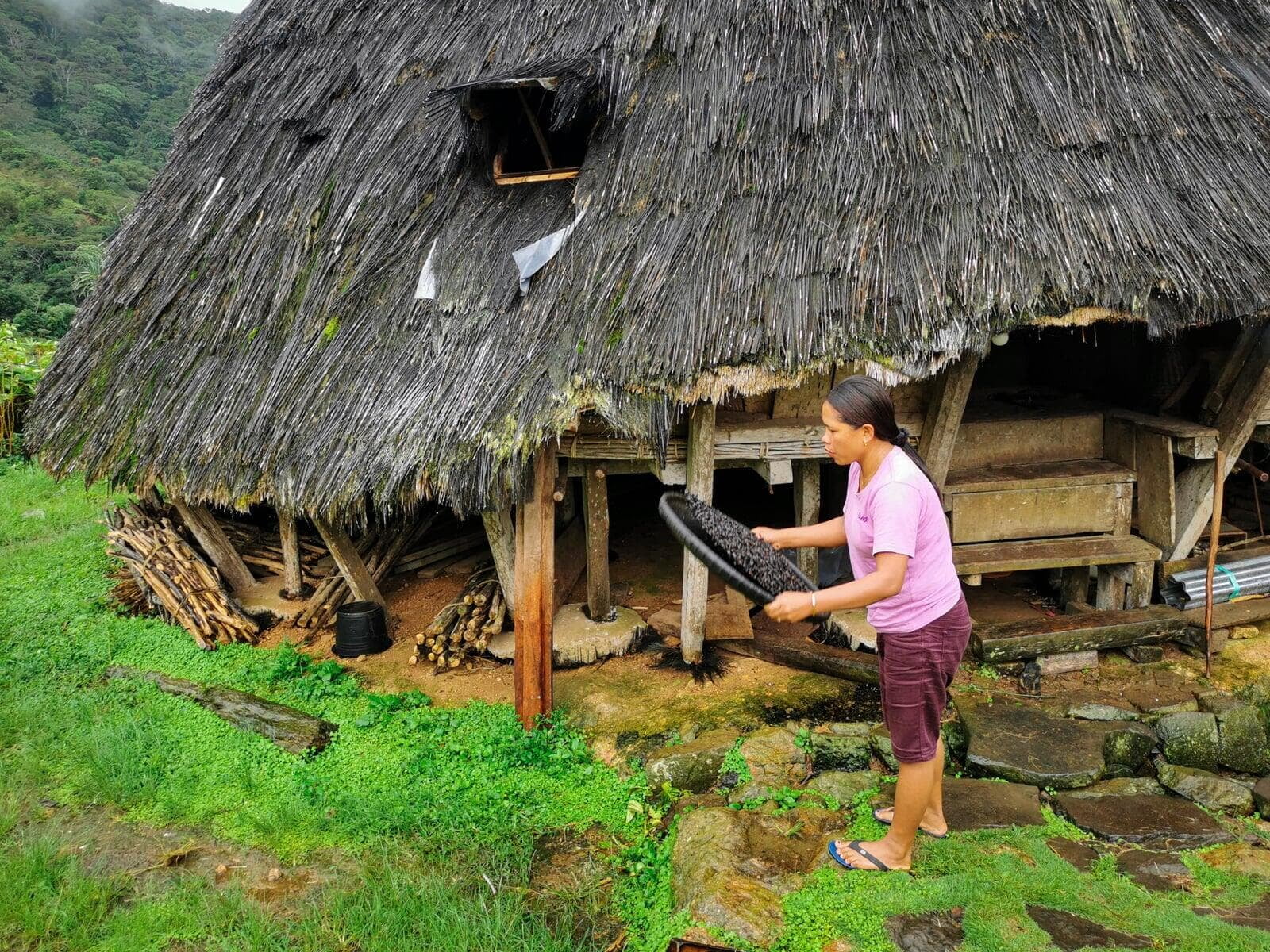
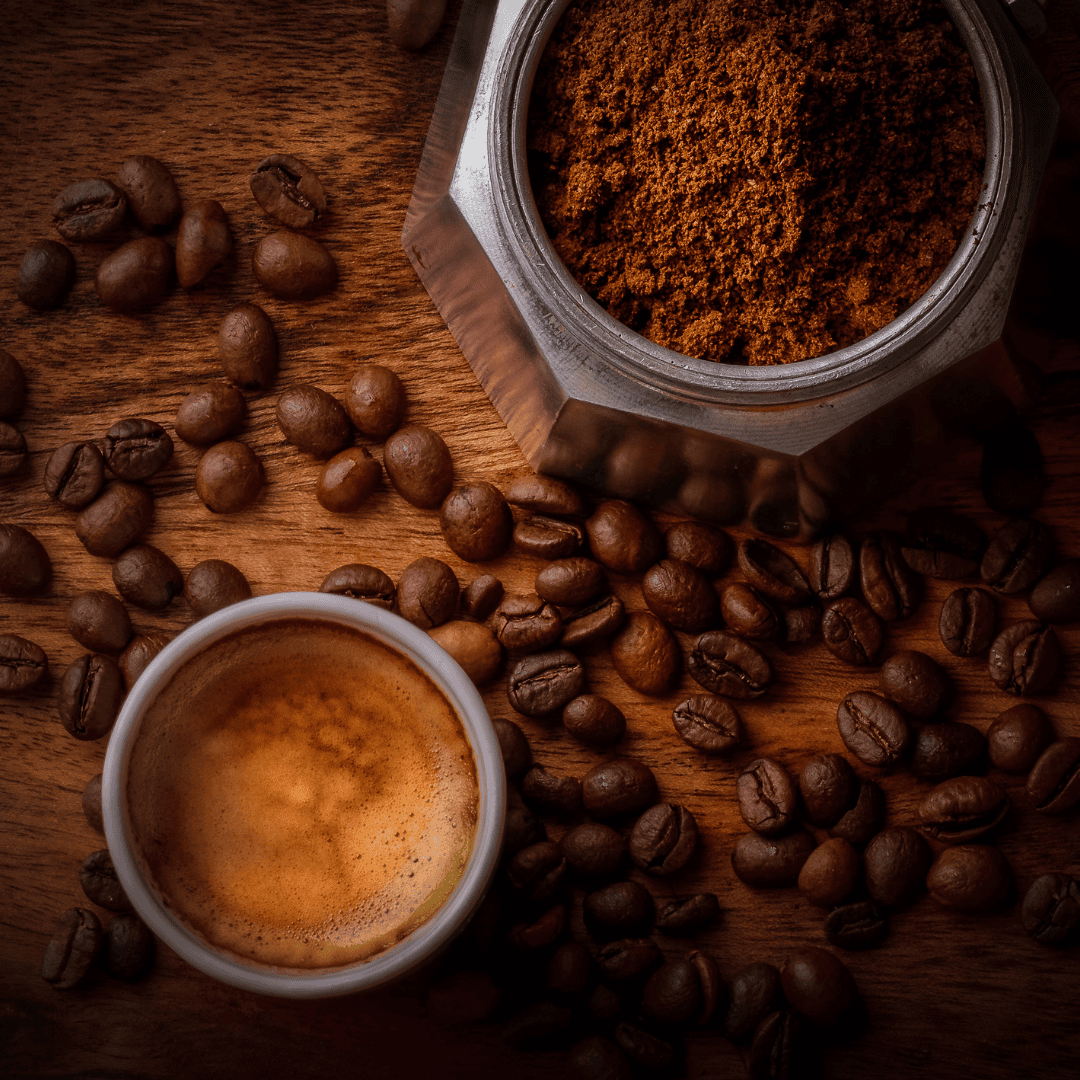
As a conclusion of my honest review, the best part of coffee Wae Rebo lies not just in the final cup, but in the entire process – a symphony of simplicity and tradition. Their reliance on time-tested methods, the absence of modern machinery, only adds to the authenticity of the experience. It’s a culmination of their local culture, a story whispered in smoke and fire, and a taste that lingers long after the last drop.
Beyond the selfie
Although I had fun doing my own coffee research in the field and my glimpse into their coffee culture was nothing short of extraordinary, it made me mad that the government doesn’t put more effort to encourage the local to always include this coffee process as part of the experience on visiting the village above the clouds, especially their coffee is part of their legacy. I remember how my request to have a coffee tour was turned down simply because it’s not the coffee season. It seemed like such a missed opportunity – not just for me, but for the village itself. Why wasn’t their unique coffee culture being showcased as an important part of the visitor experience?
With the booming of social-media, traveling has a different meaning, it’s all about the selfies and the sceneries and it irks me so much. Travel is a privilege, and with that privilege comes a responsibility to learn, to connect, and to share. Yes, the vista in Wae Rebo is unmatched, but what’s the point of traveling if it’s only for sleeping in a new place without learning anything new?